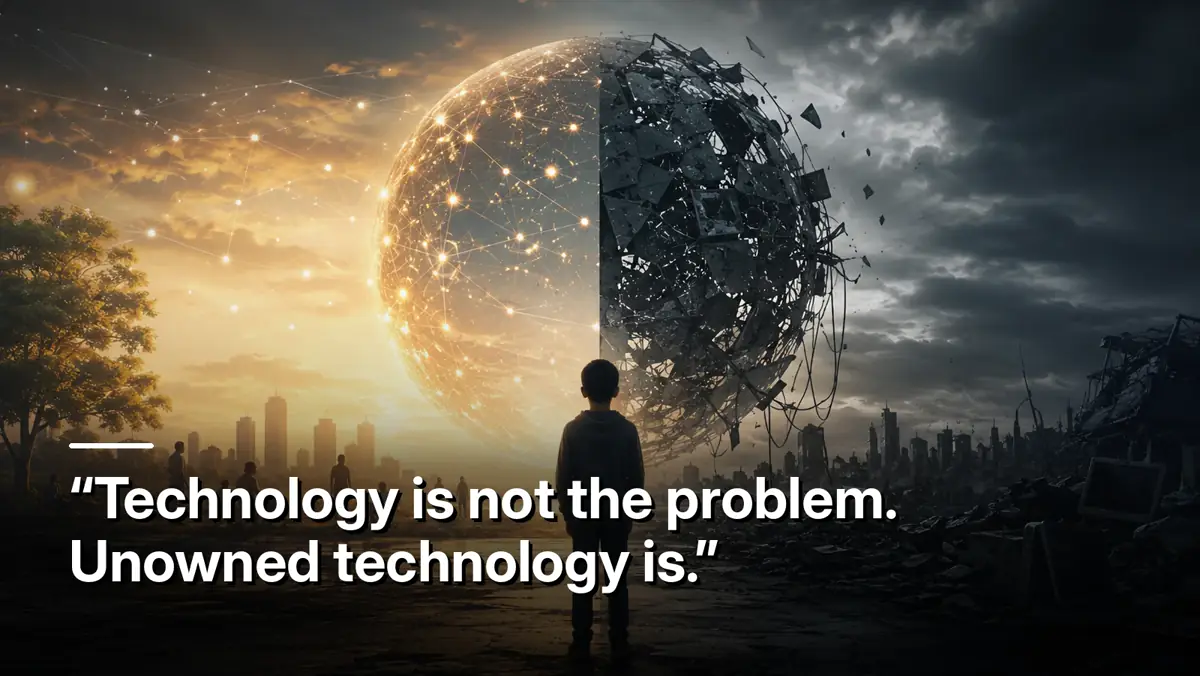
Most business technology problems do not start as major failures.
They start small.
A spreadsheet becomes the workaround. A vendor owns one piece but not the full result. A system gets added without a clear rollout plan. A report becomes manual because two platforms do not talk to each other. A project keeps moving, but never quite gets finished.
At first, everyone adapts. People find ways to get the work done. That is what good teams do.
But over time, those workarounds become the operating model.
That is when technology stops helping the business and starts creating drag.
The Real Problem Is Often Ownership
Many growing businesses do not need another app, another dashboard, or another vendor pitch.
They need someone to own the path from problem to working result.
That is a very different role.
A consultant may give advice. A vendor may support their product. A developer may build what is requested. An internal team may keep the day-to-day systems running.
All of those roles can be useful. But none of them automatically owns the full business outcome.
That gap is where projects stall.
The issue is rarely that people are not working hard. The issue is that no one has clear ownership over the full path: the business problem, the tradeoffs, the tools, the vendors, the workflow, the rollout, and the follow-through.
When ownership is unclear, decisions slow down. Costs spread out. Risk gets buried. Teams keep operating around the problem instead of solving it.
Technology Drag Shows Up in Practical Ways
Technology drag does not always look technical.
It often looks like:
- Duplicate data entry.
- Manual approvals.
- Reports that take too long to produce.
- Systems that technically work but do not fit how people actually operate.
- Vendors pointing at each other when something breaks.
- Leaders making decisions without clear visibility.
- Teams relying on one person who "knows how it works."
- Projects that were approved but never fully adopted.
These are not just IT issues. They are operating issues.
They affect cost, speed, quality, risk, accountability, and leadership confidence.
The business feels the friction even when the systems appear to be running.
Why ClingCentral Exists
I created ClingCentral for owners and operators who need senior technology judgment, but may not need or be ready for a full-time technology executive.
ClingCentral is built for work that cannot simply be handed to a vendor and forgotten.
The focus is not more technology.
The focus is better ownership of technology decisions, systems, workflows, vendors, reporting, automation, and execution.
That can include choosing priorities, cleaning up tool sprawl, connecting systems, guiding vendors, improving workflows, building or leading custom solutions, using AI where it actually makes sense, and turning scattered activity into clearer reporting.
The common thread is accountability.
The work needs to move from confusion to clarity, from handoff to ownership, and from plan to daily use.
The ClingCentral Operating Path
Good technology work needs structure.
At ClingCentral, the path is straightforward:
Assess
Understand the tools, workflows, limits, risks, and decision points shaping the problem.
Rank
Identify what matters most. Do not waste time fixing symptoms before the real constraint is clear.
Plan
Define the right technology path, work model, rollout approach, and decision points.
Deliver
Build, connect, guide vendors, manage the work, and move the solution into use.
Measure
Confirm that the result actually works in daily operations, not just in a project plan.
That last step matters.
A project is not finished because software was installed. It is finished when people can use it, trust it, and run the business better because of it.
The Goal: Clearer Work, Not More Software
Technology leadership should not be about chasing trends.
It should be about making the business easier to run, easier to see, and easier to improve.
For many organizations, the best move is not a massive transformation project. It is finding the weak points, cleaning up the handoffs, making better decisions, and getting stalled work moving again.
Sometimes that means automation. Sometimes it means better reporting. Sometimes it means vendor accountability. Sometimes it means connecting systems. Sometimes it means stopping a bad idea before it becomes expensive. Sometimes it means leading the hard middle between business needs and technical execution.
That is where ClingCentral fits.
A Practical Question for Operators
Where is technology creating drag right now?
Is it risk? Cost? Manual work? Vendor confusion? Reporting gaps? A stalled project? A system nobody fully owns? A process that depends too much on memory and workarounds?
That is usually the real starting point.
ClingCentral helps turn that drag into owned work with one clear path, practical decisions, and follow-through that reaches daily use.