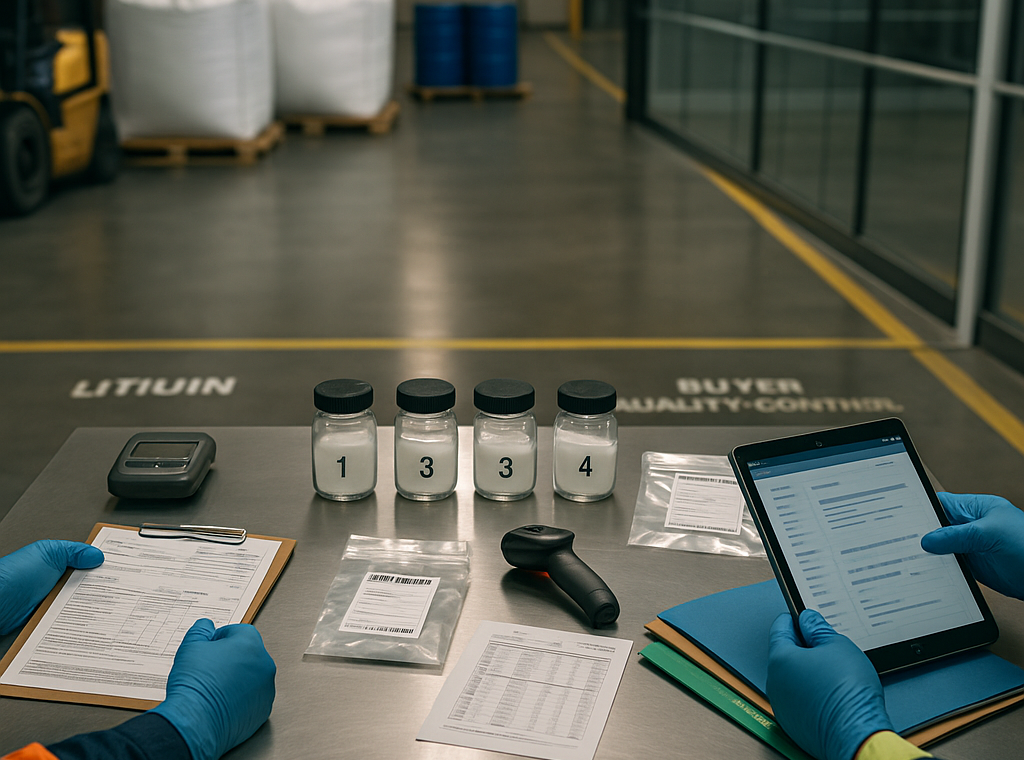
Lithium is usually discussed as a materials problem: supply, cost, emissions, extraction, and demand. For operators, the deeper issue is governance. When a new extraction process can change the economics and footprint of a critical input, it also exposes how fragile many sustainability programs are. The operational question is not whether the process succeeds. It is whether the organization can prove what it is buying, where it came from, and who controls the evidence.
The Hidden Issue Behind This Story
The reported extraction method uses a weak acid to dissolve silicate minerals, freeing lithium along with other materials such as alumina and silica. Researchers involved in the work believe it could become a lower-cost way to source lithium at scale, and a startup is working to commercialize it. Those are the known facts. Everything else depends on execution, permitting, economics, and adoption.
Most coverage will focus on whether the method could improve lithium availability for electric vehicles and energy storage. That is a valid question, but it is not the most important operational lesson for CIOs, infrastructure leaders, security teams, and business owners.
The hidden issue is that sustainability claims are becoming dependent on process-level operational data that many companies do not own, cannot independently verify, and have not contractually secured.
Sustainability is no longer a reporting category. It is a supply chain control problem.
If a new extraction method lowers emissions, reduces cost, or changes where lithium can be sourced, it may improve the business case for electrification. But it also changes the evidence chain behind product claims, procurement decisions, supplier risk models, lifecycle assessments, and customer commitments. The organization that treats this as a procurement update will miss the control issue underneath.
A material can become cleaner, cheaper, and more available while the buyer becomes less certain about the data used to prove it.
Why This Matters Operationally
Operators should care because sustainability commitments are increasingly embedded in business operations, not isolated in annual reports. They influence supplier selection, product design, customer contracts, financing, insurance, facility planning, and technology roadmaps. When a critical material changes, those downstream decisions can move with it.
If leadership ignores this, the failure may not appear as a supply shortage. It may appear as a contract dispute, a delayed product launch, an audit gap, a customer challenge, or a procurement team unable to reconcile supplier claims with internal reporting requirements.
The operational consequence is simple: new extraction methods can shift the bottleneck from access to lithium to access to trustworthy evidence about lithium.
That evidence is not just a certificate. It may include process data, energy inputs, chemical inputs, transport records, custody transfers, co-product allocation methods, site-level controls, and supplier attestations. Some of that data may sit with miners, processors, logistics providers, certification bodies, software platforms, or commercial partners. Some may be proprietary. Some may be unavailable after the fact.
This creates a second-order consequence. If lower-cost lithium accelerates electrification programs, the organization may scale commitments faster than it scales governance. Fleet transitions, battery storage projects, data center backup strategies, and product sourcing decisions can all become dependent on claims that were never designed to withstand operational scrutiny.
A cheaper supply chain can still be an ungoverned supply chain.
This matters for technology and security leaders because the proof layer is becoming digital. Traceability systems, supplier portals, carbon accounting platforms, ERP integrations, procurement data, and third-party attestations are now part of the operating environment. If those systems are fragmented, poorly controlled, or vendor-managed without clear ownership, sustainability data becomes another unmanaged control plane.
The Dependency Most Organizations Overlook
The overlooked dependency is not lithium itself. It is the chain of authority behind the sustainability claim.
Who is allowed to say a material is lower-emission? Who validates the process? Who owns the raw evidence? Who can change the methodology? Who reconciles supplier-provided data against operational reality? Who signs off when procurement, legal, finance, engineering, and sustainability teams disagree?
In many organizations, the answers are unclear. Sustainability teams own the targets. Procurement owns the supplier relationship. Engineering owns material specifications. Legal owns contract language. Finance owns disclosures and capital allocation. IT owns systems of record. Security owns third-party access. Operations owns continuity. No single function owns the full evidence chain.
That is the governance gap.
The incentive conflict is equally important. Suppliers are motivated to present their process in the most favorable commercial light. Buyers are motivated to secure supply and meet sustainability targets. Internal teams are motivated to keep projects moving. Certification providers and data platforms may be paid by participants in the ecosystem. None of those incentives are automatically improper, but they are not the same as independent operational control.
The common assumption being challenged is that a greener process reduces governance complexity. It may do the opposite.
If a new method produces lithium and additional useful outputs such as alumina and silica, organizations may face questions about how impacts are allocated across products. If the process uses different inputs than conventional methods, existing supplier questionnaires may not ask the right questions. If commercialization happens through new companies or new partnerships, vendor risk models built around established suppliers may be incomplete. If geography changes, logistics, regulatory exposure, labor practices, site resilience, and data availability may change with it.
Here is the gut punch: many companies do not have a lithium supply chain. They have a lithium purchasing process surrounded by sustainability assumptions.
That distinction matters. A purchasing process can place an order. A governed supply chain can defend a claim, withstand a disruption, and explain a decision six months later when the original assumptions are challenged.
What This Changes For Leadership
Leadership should reconsider how sustainability-linked sourcing decisions are approved. The decision cannot be limited to price, availability, and reported emissions. It has to include control over evidence, data rights, auditability, substitution risk, and ownership of exceptions.
The executive decision to revisit is whether sustainability commitments are being made faster than the organization can govern the supply chains behind them.
This is not an argument against ambitious electrification or clean technology investments. It is an argument against treating material innovation as if it automatically translates into enterprise readiness. A promising extraction process can improve the economics of lithium while introducing new vendor dependencies, new data dependencies, and new assurance requirements.
CIOs and IT directors should view sustainability data as operational data, not communications data. If it supports procurement decisions, customer claims, financing, or regulatory reporting, it requires controls comparable to other business-critical information. That means defined ownership, access control, retention, lineage, change management, and integration discipline.
Security leaders should also pay attention. As supply chain evidence becomes digitized, the systems that collect and transmit it become targets for manipulation, fraud, and commercial espionage. A supplier portal that supports sustainability claims may not look like critical infrastructure, but if it influences purchasing, disclosures, or customer commitments, it can affect enterprise risk.
Operations leaders should reconsider resilience assumptions. A new process that promises lower cost may change supplier economics and market behavior. Existing suppliers may respond. New entrants may appear. Customers may request updated sourcing evidence. Internal teams may pressure procurement to move quickly. Each of those changes can create operational churn before the technology is mature at scale.
The real risk is rarely the new process itself. It is the old governance model being applied to a changed dependency.
What Operators Should Evaluate Now
Map the evidence chain, not just the supply chain
Operators should identify where sustainability claims originate, how they move through vendors and systems, and where they are transformed into internal decisions. This matters because the weakest point may not be the mine, processor, or logistics provider. It may be the spreadsheet, portal, methodology, or approval workflow that turns supplier statements into enterprise claims.
This prevents a common failure: discovering during an audit, customer review, or financing process that the organization cannot reproduce the evidence behind a sourcing decision. It challenges the assumption that supplier documentation equals operational proof.
Review contract language for data rights and verification rights
Procurement contracts should not only secure supply. They should define access to relevant process data, audit rights, retention expectations, methodology changes, subcontractor disclosure, and notification requirements when sourcing or processing changes. This matters because sustainability evidence often becomes valuable only after a dispute or challenge occurs.
This prevents dependence on voluntary supplier cooperation after the fact. It challenges the assumption that a commercial relationship automatically grants access to the information needed for governance.
Assign ownership for sustainability data as a control plane
Leadership should decide who owns the integrity of sustainability-related operational data across procurement, IT, finance, legal, and operations. This is not the same as owning the sustainability program. It is ownership of data lineage, system integration, access, retention, and exception handling.
This prevents fragmented accountability, where every function owns a piece but no one owns the chain. It challenges the assumption that sustainability data is less operationally critical than financial, security, or production data.
Test sourcing decisions against substitution and methodology changes
If a supplier changes extraction methods, processing partners, sites, or allocation methodology, operators should understand what internal decisions are affected. Product claims, customer contracts, lifecycle calculations, and procurement scorecards may all need review.
This prevents silent drift between what the business believes it is buying and what the evidence supports. It challenges the assumption that a material remains operationally equivalent when the process behind it changes.
Separate innovation assessment from supplier assurance
A promising process should be evaluated on its technical and economic merits, but supplier assurance should remain disciplined. Early-stage commercialization can involve uncertainty around scale, consistency, financing, operational controls, and long-term availability. None of that invalidates the innovation. It simply means the governance model must match the maturity of the supplier and process.
This prevents enthusiasm from bypassing controls. It challenges the assumption that strategic importance justifies weaker assurance.
What to Watch
The first signal to monitor is whether new extraction methods move from laboratory and pilot claims into repeatable commercial operations. Until then, cost and emissions expectations should be treated as conditional. Operators should avoid building fixed commitments on uncertain scale assumptions.
The second signal is how buyers demand proof. If major customers, financiers, or regulators begin asking for more detailed material-level evidence, organizations with weak data lineage will feel pressure quickly. The issue will not be whether they support sustainability. It will be whether they can substantiate specific claims under review.
The third signal is vendor concentration. If a new process is controlled by a small number of firms, patents, facilities, or specialized partners, the supply chain may become less geographically or technically diverse than it appears. Lower cost does not automatically mean lower dependency.
The fourth signal is methodology conflict. As new processes produce multiple outputs, organizations should watch how impacts are allocated and reported. Different accounting approaches can produce different conclusions. Operators do not need to become materials scientists, but they do need to know when a sourcing claim depends on a methodology choice rather than a simple measurement.
The fifth signal is system integration. Sustainability platforms, ERP systems, procurement tools, supplier portals, and reporting workflows will increasingly carry operationally significant evidence. If those systems are not governed as part of the enterprise architecture, the organization may create a parallel data environment with weaker controls than the systems it relies on for finance or security.
Certainty remains low around which lithium extraction methods will scale, which suppliers will win, and how economics will settle. The durable lesson does not depend on those outcomes. Any material innovation that changes the source, process, or evidence behind a critical input will test whether governance is real or merely procedural.
Lithium supply chains are exposing a broader management problem: companies are making operational commitments on top of evidence chains they do not fully control. The answer is not to slow innovation. It is to govern the proof layer with the same seriousness as supply, cost, and uptime. The strategic takeaway is direct: if sustainability depends on data you cannot verify, the dependency is not sustainable.